
When foreign authorities, banks, or business partners need confirmation that an Irish company has authorised a specific action or person, they typically require a notarised board resolution. This guide explains the process.
Why Foreign Authorities Require Board Resolutions
A board resolution is formal proof that a company’s directors have approved a specific action. Foreign authorities request notarised board resolutions to confirm:
- Who is authorised to sign contracts on behalf of the company
- Who can operate bank accounts
- Who can represent the company in legal proceedings
- Approval for specific transactions (acquisitions, partnerships, etc.)
What to Include
- Company name and CRO registration number
- Date, time, and location of the board meeting
- Names of directors present (establishing quorum)
- The specific resolution passed (clear, unambiguous language)
- Name and details of any person authorised to act
- Signatures of the chairperson and directors

Watch: Hugh Phelan — Notary Public, Douglas, Cork
The Notarisation Process
- Hold the board meeting and pass the resolution
- Have the resolution signed by the directors
- A director or company secretary brings the signed resolution to the Notary Public
- The director confirms the resolution’s authenticity
- The notary notarises the document and applies their seal
- Submit to the DFA for apostille
Common Scenarios Requiring Notarised Board Resolutions
Opening Foreign Bank Accounts
When an Irish company opens a bank account abroad, the foreign bank will almost always require a notarised board resolution confirming who is authorised to operate the account, set up signing authorities, and manage the company’s finances.
International Contracts and Tenders
Government contracts and large commercial tenders in foreign jurisdictions frequently require proof that the signatory has been authorised by the board. A notarised board resolution provides this evidence in a format that foreign authorities trust.
Establishing Foreign Subsidiaries
Setting up a branch or subsidiary abroad requires the parent company’s board to formally approve the establishment. The destination country’s company registry will require a notarised copy of this resolution.
Appointing Foreign Representatives
When appointing agents, distributors, or representatives in other countries, a board resolution confirming the appointment and the scope of authority may need to be notarised.
The Authentication Chain
After notarisation, the board resolution follows the standard chain of authentication:
- Notarisation: Notary Public applies seal and signature
- DFA apostille: For Hague Convention countries
- Embassy legalisation: For non-Hague countries
- Certified translation: If the destination requires it
Processing time for the complete chain ranges from a few days (Hague country, DFA walk-in) to several weeks (non-Hague country with embassy legalisation).
Costs
- Notarisation: fees vary — contact Hugh Phelan’s office for a quote
- DFA apostille: €40 per document
- Translation: €50–€150 if required
Combined with Other Documents
Foreign authorities often request board resolutions alongside articles of association and certificates of good standing. Getting all documents notarised in a single appointment is the most efficient and cost-effective approach.
Frequently Asked Questions
Why do board resolutions need notarisation?
To provide foreign authorities with verified proof of corporate authorisation.
What should the resolution contain?
Company details, meeting date, directors present, the specific resolution, and signatures.
Can it be notarised after the meeting?
Yes — a director confirms its authenticity before the notary.
Do all resolutions need notarising?
Only those for international use.
Corporate Document Notarisation
Hugh Phelan, Solicitor and Notary Public, practises from East Douglas Street, Douglas, Cork.
Contact: 021-489-7134 or info@phelansolicitors.com.
📚 Related Guides
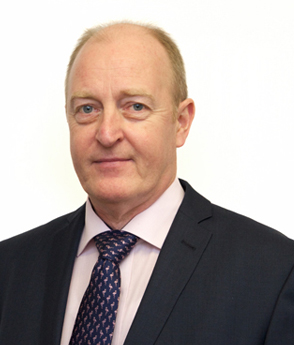
Hugh Phelan — Notary Public Cork
Solicitor & Notary Public appointed by the Chief Justice of Ireland. Over 20 years' experience. BCL (UCC), dual-qualified Ireland & England/Wales.
📍 Notary Public Cork — Hugh Phelan
Need a Notary Public in Cork? Hugh Phelan is a Solicitor & Notary Public appointed by the Chief Justice of Ireland, based at East Douglas Street, Douglas, Cork. Same-day appointments available.
Looking for a Notary Public in Cork?
Hugh Phelan is a Solicitor & Notary Public appointed by the Chief Justice of Ireland.
Notary Public Cork — Book Now📞 +353-21-489-7134 · East Douglas Street, Douglas, Cork
Also see: Cork Notary Public — Book Appointment